
Contact Lens & Eyeglass Safety

Intro Text / Subtitle

The Academy works to protect patients from the dangers of illegally sold contact lenses, while opposing unnecessary burdens on prescribers.

Components

Where We Stand

Body

The Academy supports federal regulation of contact lenses to protect both consumer choice and patient safety. Contact lenses are medical devices — not costume accessories or commodity products — and patients deserve legal, properly fitted lenses prescribed and supervised by a qualified eye care provider.

At the same time, the Academy opposes regulatory changes that place unnecessary administrative burdens on ophthalmologists without meaningfully improving patient safety. 

What We’re Doing

Body

Opposing burdens on prescribers

The Academy, alongside the American Optometric Association and other organizations, actively opposed the Federal Trade Commission's 2020 amendments to the Contact Lens Rule, which imposed new documentation and record-keeping requirements on prescribers. These include a requirement for prescribers with a financial interest in the sale of contact lenses to obtain patient confirmation of prescription receipt, and a three-year record retention requirement applicable to all prescribers. Despite opposition from the Academy, the  American Optometric Association (AOA), and more than 100 members of Congress,  the FTC finalized these requirements, which took effect October 16, 2020. The Academy continues to monitor FTC enforcement and advocate for proportionate, evidence-based regulation.

Protecting patients from illegal sellers

The Academy, AOA, and the American Academy of Optometry encourage consumers to understand the risks of using unprescribed contact lenses, including cosmetic and costume lenses, which can cause corneal abrasions, ulcers, infections, and permanent vision loss. The Academy works with the Food and Drug Administration (FDA) and FTC to educate patients and ensure retailers follow the law, and continues to press federal agencies to direct enforcement attention toward illegal sellers rather than compliant prescribers.

Engaging on FTC rulemaking

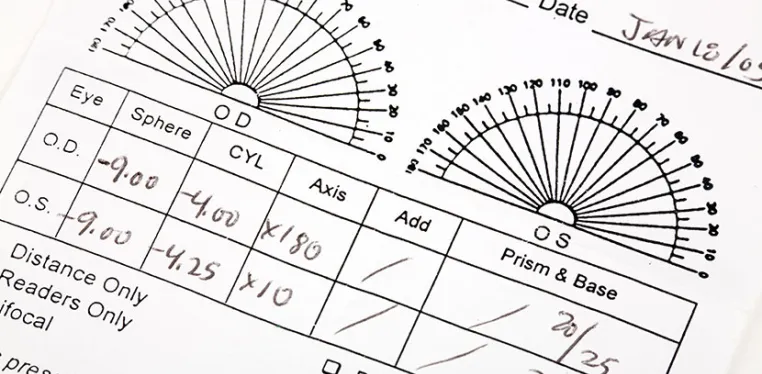
The Academy participates in FTC rulemaking processes through public comment and direct engagement with agency leadership. Most recently, the FTC updated the Eyeglass Rule in June 2024 with documentation and record-keeping requirements similar to the 2020 Contact Lens Rule amendments, effective September 24, 2024. The Academy actively engaged the FTC during this rulemaking process and will continue to respond to any further proposed changes to either rule.

Patient education

Through its EyeSmart® public awareness campaign, the Academy educates patients about the risks of improperly sold contact lenses — including decorative and costume lenses sold without a prescription. The campaign has received national media coverage and reaches millions of consumers each year.

 

Member exclusive - Locked
A closeup of a prescription for eyeglasses

Ophthalmology Engages With FTC as Eyeglass Rule Compliance Date Nears

Although prescribers have until Sept. 24 to comply with finalized updates to the eyeglass rule, the Academy confirmed with the FTC that the rule would not supersede medical judgment.

Member exclusive - Locked
A closeup of a prescription for eyeglasses

Academy Urges FTC to Extend Implementation Deadline for Updated Eyeglass Rule

We underscored our opposition to the new requirements in the finalized Eyeglass Rule and urged the commission to extend the implementation deadline to Jan. 1, 2025.

Member exclusive - Locked
A closeup of a prescription for eyeglasses

FTC Rule Extends Onerous Requirements for Eyeglass Prescriptions

Although the Federal Trade Commission did not scrap the proposal, Academy advocacy resulted in meaningful flexibility for meeting new requirements.

What You Can Do

Body
  • Report adverse events related to illegal or non-prescription contact lenses directly to the FDA's MedWatch program.
  • Report retailer violations of the Contact Lens Rule through the FTC Complaint Assistant.
  • Educate your patients about the risks of costume and decorative contact lenses using resources from the Academy's EyeSmart website for patients and the public.
  • Ensure your practice is compliant with current Contact Lens Rule requirements. Key obligations include automatic prescription release at the conclusion of a fitting, three-year record retention, and — for prescribers with a financial interest in contact lens sales — obtaining patient confirmation of prescription receipt. For compliance guidance, visit the FTC's Contact Lens Rule resource page or learn how to get involved in the Academy’s advocacy work. 

Background

Body

The U.S. government classifies contact lenses as Class II medical devices, subject to FDA approval and regulation. The FTC's Contact Lens Rule — originally established in 2004 under the Fairness to Contact Lens Consumers Act (signed into law in 2003) — sets requirements to ensure consumer choice and a competitive marketplace while protecting patient safety.

Federal law requires a valid prescription to purchase contact lenses. Stores or websites selling contact lenses without requiring a prescription are engaging in illegal business activities subject to federal law enforcement. Contact lenses sold without a prescription may also be counterfeit and not FDA-approved, putting users at further risk for complications including permanent vision loss.

Despite these protections, illegal sales persist — particularly of decorative and costume contact lenses sold online, in costume shops, gas stations, and convenience stores. The current verification system gives prescribers only eight business hours to actively verify a prescription before it is passively verified — meaning sellers can proceed without confirmation. The Academy believes this window is inadequate and allows too many patients to receive incorrect or ill-fitted lenses.

The FTC amended the Contact Lens Rule in 2020, with the final rule taking effect October 16, 2020. The amendments added several new requirements for prescribers, including: automatic prescription release at the conclusion of a fitting; for prescribers with a financial interest in the sale of contact lenses, obtaining patient confirmation of prescription receipt (by signed acknowledgement or documented digital delivery); and retention of related records for at least three years. The FTC issued a similar update to the Eyeglass Rule in June 2024, effective September 24, 2024, mirroring many of the same documentation requirements. 

Content Cards Group