Congress Presses VA Over Changes to Eye Surgery Safety Guidelines

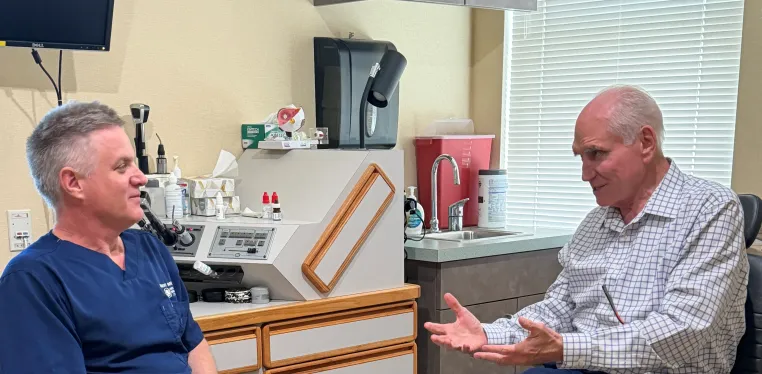
Ophthalmologist and U.S. Representative Mariannette Miller-Meeks sent a letter to the Department of Veterans Affairs Under Secretary for Health expressing concern that the agency removed language from community care guidelines allowing only ophthalmologists to perform invasive procedures.

Concerned that a recent change to the Veteran’ Health Administration’s Community Care Program guidelines lowers the standard of eye care for the nation’s veterans, a group of U.S. House of Representatives members and a senator has sent a letter to the agency demanding answers.

The letter was led by Rep. Mariannette Miller-Meeks, MD, R-Iowa, an ophthalmologist and a veteran, and signed by four other physician members of Congress. It was delivered to the VA Under Secretary for Health Shereef Elnahal, MD, MBA, on Oct. 18.

Their action comes after the VA’s action to remove language from the Community Care “Standardized Episode of Care: Eye Care Comprehensive” guideline that has historically provided that “only ophthalmologists can perform invasive procedures, including injections, lasers and eye surgery.”

The Academy shares lawmakers’ concern that “by removing this standard, even if the VA intends to defer to state licensure and scope of practice law, the VA is creating confusion by implying that someone other than an ophthalmologist — e.g., an optometrist — can perform invasive eye surgery.”

In their letter, the members of Congress are asking the VA for answers to specific questions so the lawmakers can “better understand the steps the VA is taking to prevent poor outcomes for veterans.”

Dr. Miller-Meeks was joined on the letter by Sen. Roger Marshall, MD, R-Kan., and Reps. Larry Bucshon, MD, R-Ind., Andy Harris, MD, R-Md., and Greg Murphy, MD, R-N.C.

The Academy shares their concerns. By removing the clause limiting surgery to ophthalmologists, the VA is implicitly authorizing optometrists to perform ophthalmic surgery on veterans that are referred under this program, where permitted by state licensure laws. We are concerned about the implications the community care policy change could have for the national standards that the VA is developing for optometry.

We remain committed to the fight to protect quality eye care for the nation's veterans. We were glad to meet and discuss this issue with many veterans at AAO 2022 in Chicago. We cannot fight for veterans’ eye care alone.

We need to hear from ophthalmologists who are veterans. Contact politicalaffairs@aao.org and tell us your story.
Related Stories

Member exclusive - Locked
capital building side

OPHTHPAC Midterms Recap: What the Results Mean for Ophthalmology

The 2026 midterm results are nearly final, and thanks to the support of ophthalmologists nationwide, OPHTHPAC helped secure important victories for ophthalmology this election cycle: 100 of 114 OPHTHPAC-backed candidates won their general election races, with a few results still being finalized. Here is what this year’s results mean for ophthalmology.

Member exclusive - Locked
A sign that reads "United States Department of Health and Human Services"

Academy Pushes Back on CMS’ Harmful Proposals in Formal Comments

The Academy has asked the Centers for Medicare & Medicaid Services to reconsider proposed Medicare payment changes that could harm ophthalmologists, including new practice expense policies, proposed reductions for same-day evaluation and management (E/M) visits billed with Modifier -25 and global procedures, and major changes to Merit-Based Incentive Payment System (MIPS) reporting.

Member exclusive - Locked
August Recess Meetings

Ophthalmologists Deliver Messages to Congress Personally During August Recess

Academy members made use of a powerful opportunity to advance the Academy’s key priorities, engaging with legislators and their staff while in their home districts, away from Capitol Hill.

Latest Updates

Member exclusive - Locked
capital building side

Final Hospital Outpatient, ASC Rule: Pay Raises for Device-Intensive Procedures, But Cuts to Other Common Ophthalmic Surgeries

Hospital outpatient departments (HOPD) and ambulatory surgical centers will get a 2.3% payment increase in 2027. But the rule released Nov. 4 by the Centers for Medicare & Medicaid Services includes hidden reimbursement cuts for most ophthalmology surgeries.

Member exclusive - Locked
HHS

2027 Fee Schedule Finalizes Pay Cut to Physicians Between 1.8% and 2.3%

The final rule from the Centers for Medicare & Medicaid Services (CMS) includes a 2.31% payment cut for physicians not participating in qualifying APMs and a 1.83% pay cut for qualifying Alternative Payment Model (APM) participants. 

Member exclusive - Locked
An exterior shot of the United States Capitol building

Academy Challenges Medicare Contractor on Vabysmo Denials and Audits Targeting Treat-and-Extend Dosing

Claim denials and audit failures has prompted the Academy to call on two Medicare administrative contractors to review polices on treat-and-extend dosing for the eye injection medication Vabysmo.