VA Drops Eye Surgery Safety Language for Care Vets Receive in the Community

The Academy is opposing the Department of Veterans Affairs recently modified eye care guidelines for treatment at community care facilities, which will jeopardize patient safety by allowing optometrists in certain states to perform some surgical procedures.

The Department of Veterans Affairs (VA) has modified its eye care guidelines for treatment from community providers, jeopardizing patient safety by allowing optometrists to perform some surgical procedures.

Without seeking outside comment, the VA removed language last month from the Community Care “Standardized Episode of Care: Eye Care Comprehensive” guideline that has historically provided that “only ophthalmologists can perform invasive procedures, including injections, lasers and eye surgery.”

This change is independent from the VA’s development of national standards of practice, a separate process the Academy is closely monitoring.

We are concerned about the potential implications the community care policy change could have for the national standards currently being developed. By removing the clause limiting surgery to ophthalmologists, the VA is implicitly authorizing optometrists to perform ophthalmic surgery on veterans they refer under this program where permitted by state licensure laws. We estimate that about 10% of the U.S. population currently lives in states that allow optometrists to perform laser surgery.

The Academy is concerned that the VA has removed an important patient safeguard, posing increased risk to veterans requiring surgical eye care.

We sent a letter Monday to the VA’s new undersecretary for health, Shereef Elnahal, MD, outlining our concerns and urging the VA to immediately undo the change and restore the language that maintains the long held standard that only ophthalmologists can perform invasive procedures.

Academy CEO Stephen D. Mcleod, MD, is reaching out to academic medical centers with VA affiliation to alert them to this issue.

The Academy is committed to the fight to protect quality eye care for the nation's veterans, but we cannot do it alone. We need to hear from ophthalmologists who are veterans. Contact politicalaffairs@aao.org and tell us your story.

If you are an ophthalmologist and a military veteran who will attend AAO 2022, come talk to us at the OPHTHPAC®-Surgical Scope Fund Booth in the Grand Concourse Level 3 at McCormick Place about how you can help us advocate on this important issue and get a free Starbucks gift card.
Related Stories

Member exclusive - Locked
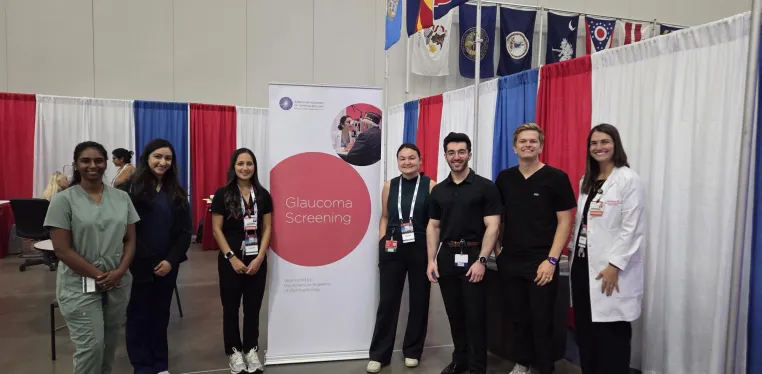
Glaucoma Screening

Academy Sponsors Glaucoma Screenings at the American Legion Convention

Academy-supported screenings help veterans and their families identify potentially serious eye conditions.

Member exclusive - Locked
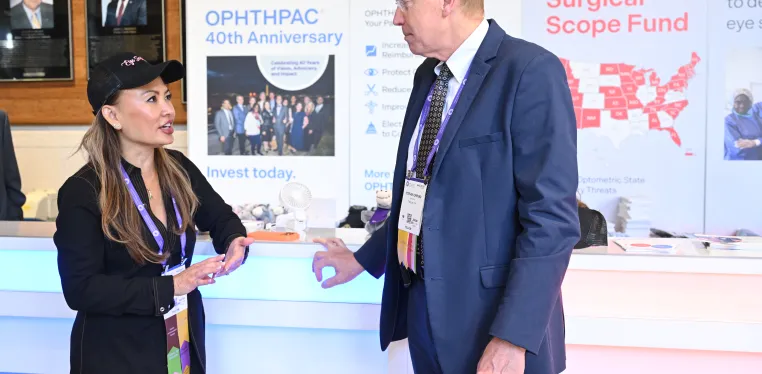
Advocacy Booth 2025

Advocacy at AAO 2026

AAO 2026 is a great time to delve into the Academy's advocacy efforts and meet those who are making a difference in federal and state legislation. Whether you stop by the OPHTHPAC® and Safe Surgery Action Fund (formerly the Surgical Scope Fund) booths to learn about our work, join us at our reception, or attend one of our advocacy sessions, we’re looking forward to seeing you this year in New Orleans. All sessions are in Central Time.

Member exclusive - Locked
VA Hopes New Technology Will Ease Community Care Program Scheduling for Practices

VA Hopes New Technology Will Ease Community Care Program Scheduling for Practices

The Department of Veteran Affairs’ new External Provider Scheduling cloud-based technology system allows VA schedulers to book approved appointments directly into community care program participants’ systems.

Latest Updates

Member exclusive - Locked
capital building side

OPHTHPAC Midterms Recap: What the Results Mean for Ophthalmology

The 2026 midterm results are nearly final, and thanks to the support of ophthalmologists nationwide, OPHTHPAC helped secure important victories for ophthalmology this election cycle: 100 of 114 OPHTHPAC-backed candidates won their general election races, with a few results still being finalized. Here is what this year’s results mean for ophthalmology.

Member exclusive - Locked
capital building side

Final Hospital Outpatient, ASC Rule: Pay Raises for Device-Intensive Procedures, But Cuts to Other Common Ophthalmic Surgeries

Hospital outpatient departments (HOPD) and ambulatory surgical centers will get a 2.3% payment increase in 2027. But the rule released Nov. 4 by the Centers for Medicare & Medicaid Services includes hidden reimbursement cuts for most ophthalmology surgeries.

Member exclusive - Locked
HHS

2027 Fee Schedule Finalizes Pay Cut to Physicians Between 1.8% and 2.3%

The final rule from the Centers for Medicare & Medicaid Services (CMS) includes a 2.31% payment cut for physicians not participating in qualifying APMs and a 1.83% pay cut for qualifying Alternative Payment Model (APM) participants.